

Shangfeng 63 Amp Industrial Plug Includes Secure Locking Unlike Ordinary Plugs Connections
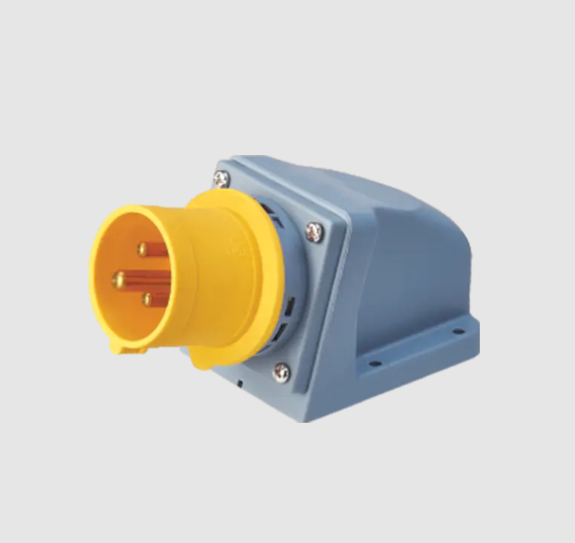
When it comes to electrical connections in demanding settings, a 63 Amp Industrial Plug serves as a practical choice for users who need steady power delivery. Many people wonder about the differences between industrial plugs and ordinary plugs, especially when selecting components for workshops, factories, or outdoor sites. These variations arise from the distinct requirements of each type, with industrial versions built to manage higher loads and tougher conditions while ordinary ones focus on everyday household needs. Understanding these points helps operators choose the right equipment and avoid common issues like overheating or frequent replacements.
One clear distinction lies in the way each plug handles current and voltage. Ordinary plugs, often found in homes or offices, typically support lower amperage ratings such as 10 to 15 amps. They work well for standard appliances like lamps or computers but fall short when power tools or machinery draw more electricity. In contrast, industrial plugs accommodate much higher currents, allowing continuous operation of heavy equipment without strain. This capacity comes from thicker conductors and reinforced contacts that distribute energy evenly and reduce resistance over time.
Construction materials also set the two categories apart. Ordinary plugs usually feature lightweight plastic housings designed for indoor comfort and easy handling. These materials provide basic protection but can wear down under repeated use or exposure to dust and moisture. Industrial plugs incorporate durable casings, often with rubber or composite elements that resist impacts, chemicals, and temperature shifts. Their pins and sockets receive additional plating to prevent corrosion, which extends service life in environments where ordinary plugs would degrade quickly.
Safety features provide another area of difference. Ordinary plugs rely on simple grounding and basic insulation suitable for controlled spaces. They lack advanced locking systems, so vibrations or accidental tugs can disconnect power unexpectedly. Industrial plugs include mechanisms that secure the connection firmly once inserted, along with higher ingress protection ratings against water and particles. This setup minimizes risks during extended operation, giving users confidence when powering conveyor belts, welding stations, or pumps in variable conditions.
Applications highlight how these plugs fit into real-world scenarios. Ordinary plugs suit residential tasks where power demands stay modest and usage occurs intermittently. They remain compact and cost-effective for such purposes. Industrial plugs, however, support commercial and manufacturing processes that run for hours or days without pause. Their design ensures consistent performance in settings like construction sites, warehouses, or event venues where downtime carries significant costs. Operators often pair them with compatible sockets to create complete circuits that maintain efficiency across shifts.
Beyond the technical aspects, the selection process involves matching the plug to the specific load and location. Factors such as cable thickness, enclosure type, and compliance with local standards play a role in long-term reliability. By comparing these elements side by side, users gain clarity on why one type outperforms the other in targeted situations. This knowledge reduces guesswork and supports smoother project planning.For additional details on plug options and guidance tailored to various setups, visit https://www.socketsfe.com/

 English
 Arabic
 Spanish
 Portuguese
 Deutsch
 Turkish
 Dutch
Dutch
 Italiano
 Russian
 Romaian
 Portuguese (Brazil)
 Greek
Greek