

Material Finishes for Contemporary Interiors
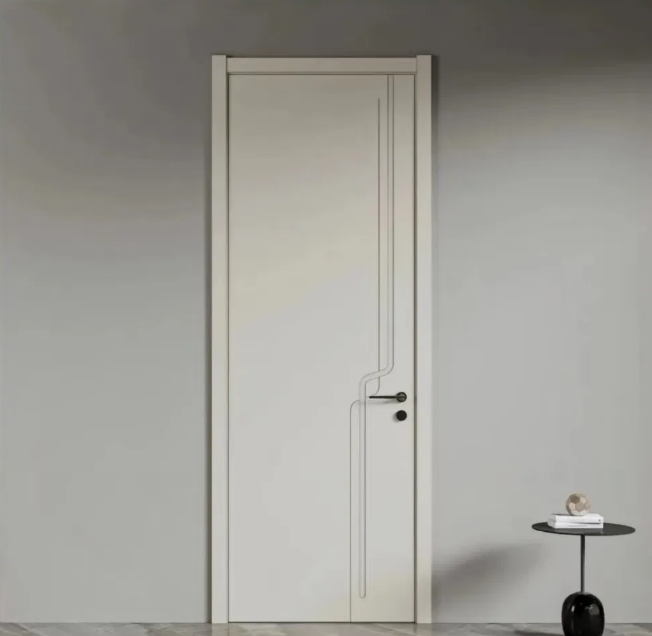
Interior architecture today focuses on balancing aesthetics with durability. One material that supports both requirements is the HPL Laminated Interior door, which provides a wide range of design flexibility while maintaining structural reliability.
HPL surfaces can replicate wood grain, stone textures, matte solids, and metallic finishes with high visual accuracy. Modern decorative layers are produced using high-resolution printing and synchronized embossing techniques, allowing tactile texture alignment with visual patterns.
From a design perspective, typical specifications include:
Surface finish options: matte, gloss, textured, anti-fingerprint
Color range: over 80–100 standard tones in industrial catalogs
Edge treatment: PVC, ABS, or wood veneer edging
Light resistance rating: high UV stability to prevent fading
Flatness tolerance: ≤ 0.3 mm deviation per panel
The HPL Laminated Interior Door is frequently used in:
Hotel corridors
Office partitions
Residential bedrooms
Educational buildings
Architects prefer this material because it allows consistent visual repetition across multiple doors without variation in grain or color tone. This uniformity is difficult to achieve with natural wood.
Additionally, laminated surfaces are resistant to staining from coffee, ink, and cleaning agents, which helps maintain design consistency over long periods. The ability to combine aesthetics with functional durability makes HPL doors a practical architectural solution.

 English
 Arabic
 French
 Spanish
 Portuguese
 Turkish
 Dutch
Dutch
 Italiano
 Russian
 Romaian
 Portuguese (Brazil)
 Greek
Greek