

Where Is Weldless Chain Commonly Used in Construction and Marine Work?
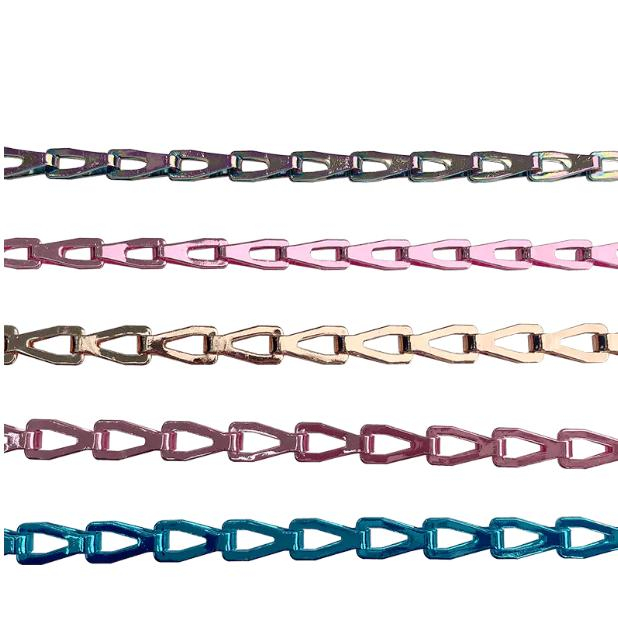
In many industrial environments, chain selection directly affects how equipment performs. This is one reason why Weldless Chain often appears in sourcing discussions. The structure is different from traditional welded chain because each link is formed by interlocking metal wire or rods rather than welding the joint.
Because of this design, the chain moves more smoothly and bends more easily. For applications involving lifting, securing loads, or moving equipment, this flexibility is often helpful. Buyers exploring suppliers often compare several Weldless Chain Manufacturers to understand material options, link sizes, and production capacity before placing orders.
1. What makes Weldless Chain structurally different?
The key difference is in how the links are formed. Instead of closing each link with a weld seam, Weldless Chain is created through a continuous forming process that loops the metal wire into interlocking links.
This structure brings a few noticeable characteristics:
The surface of the links is smoother.
The chain bends easily during operation.
Link movement remains consistent across the length.h
For lifting equipment, hoists, or cargo securing systems, smoother movement can reduce friction between the chain and surrounding hardware. Many Weldless Chain Manufacturers pay close attention to link shaping and spacing during production because it directly affects how the chain performs in real applications.
2. Where is Weldless Chain commonly used?
Different industries rely on chain systems for slightly different purposes. Weldless Chain appears in several practical environments:
Construction sites
Workers oftenuse chainsn to secure materials, support lifting equipment, or manage heavy components during installation.
Manufacturing facilities
In production environments, chain systems may help move equipment parts, support mechanical assemblies, or secure loads.
Marine applications
Cargo securing, mooring setups, and general deck equipment frequently involve chain components that must remain flexible.
Decorative and architectural uses
Beyond industrial tasks, Weldless Chain can also appear in railings, barrier chains, or design elements where a clean link appearance matters.
3. What materials are typically used?
Material choice influences how the chain behaves in different conditions. Common materials include:
Carbon steel for general industrial use
Stainless steel for environments with moisture exposure
Brass, when appearance and corrosion resistance are both considered
Experienced Weldless Chain Manufacturers usually provide several material options along with different link diameters and load ranges. Buyers selecting chains for outdoor or marine settings often compare stainless steel versions, while general factory use may focus on carbon steel models.
Since Weldless Chain is used across construction, manufacturing, and marine sectors, understanding these details helps buyers select a chain that matches their equipment and working environment.
For sourcing teams, reviewing multiple suppliers and comparing product details often provides a clearer view of what type of Weldless Chain will suit their operational needs.

 English
 Arabic
 French
 Spanish
 Portuguese
 Turkish
 Dutch
Dutch
 Italiano
 Russian
 Romaian
 Portuguese (Brazil)
 Greek
Greek