

How to Prevent Deformation in Bucket Mould Products
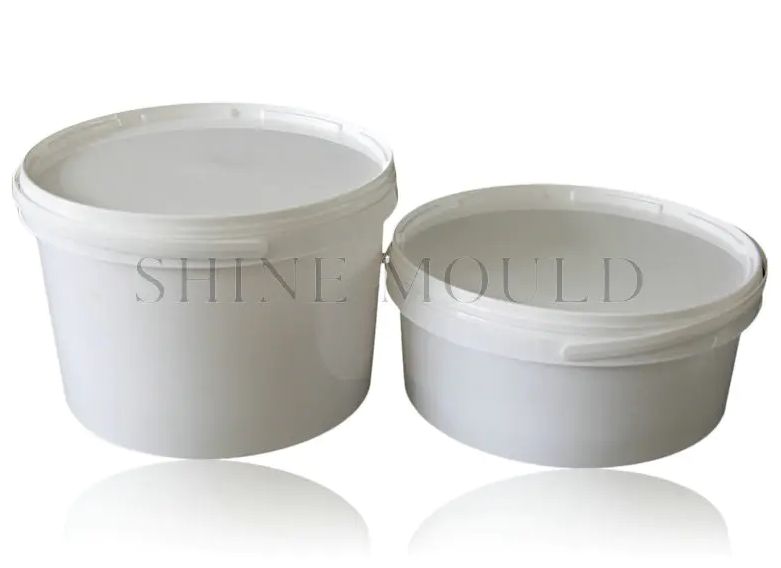
Importance of Proper Design in Bucket Mould
To avoid deformation in products made from a Bucket Mould, proper design is critical. The mould design plays a significant role in ensuring that the final product maintains its shape during and after the molding process. The thickness of the walls, the distribution of material, and the overall symmetry of the mold must be carefully planned to prevent warping or distortion. For example, uneven wall thickness can cause differential cooling rates, leading to internal stresses that cause the product to warp. A well-designed Bucket Mould ensures that the material flows evenly, reducing the risk of such issues.
Control of Cooling Rate
One of the main causes of deformation in molded products is uneven cooling. If different parts of the product cool at different rates, internal stresses can form, causing the material to warp or distort. To prevent this, it's essential to control the cooling process in the Bucket Mould. Using a uniform cooling system, such as strategically placed cooling channels, helps ensure that the entire product cools evenly. Additionally, controlling the ambient temperature and ensuring that the product cools at a steady rate can prevent excessive shrinkage or expansion during solidification, which can otherwise lead to deformation.
Material Selection and Quality
The material chosen for the molding process also affects the likelihood of deformation. Some materials are more prone to warping due to their thermal properties, while others maintain their shape better under heat. For instance, certain plastics or composites may expand or contract more than others when subjected to temperature changes, leading to deformation. It’s important to choose a material with appropriate thermal stability and shrinkage characteristics for the specific application. High-quality materials that are designed for molding applications tend to have more consistent properties, making it easier to avoid deformation during the cooling and solidifying stages.
Proper Mould Maintenance and Cleaning
Regular maintenance and cleaning of the Bucket Mould are necessary to ensure optimal performance and prevent deformation in the final product. Build-up of debris or residual material in the mould can create uneven pressure or friction, leading to product irregularities. Ensuring that the mold is free from contaminants and properly lubricated allows the material to flow smoothly and evenly, reducing the chances of deformation. Additionally, inspecting the mold for wear and tear and performing necessary repairs can help maintain its precision, ensuring that the products produced are free from defects.
Deformation in products made from a Bucket Mould can be prevented by focusing on several key factors: proper design, controlled cooling, material selection, and regular maintenance. By ensuring uniform cooling, selecting the right materials, and maintaining the mold's condition, manufacturers can minimize the risk of deformation and achieve high-quality products. Attention to detail in these areas will lead to more consistent, reliable molding results, improving product performance and reducing waste.

 English
 Arabic
 French
 Portuguese
 Deutsch
 Turkish
 Dutch
Dutch
 Italiano
 Russian
 Romaian
 Portuguese (Brazil)
 Greek
Greek