

Controlling Motors Efficiently with Relays
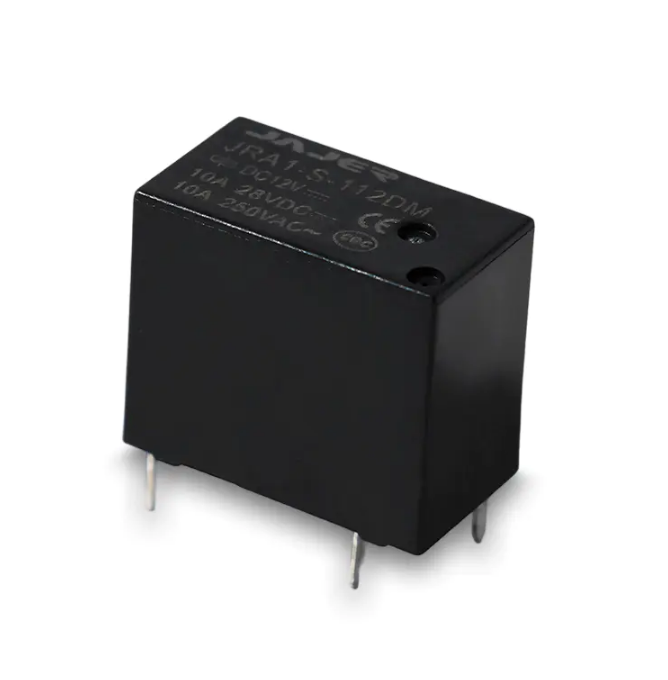
Electric motors are central to many industrial and commercial applications, and their control requires reliable switching devices. A General Purpose Power Relay is frequently used to switch motor loads, often rated at 10A to 25A at 230V AC, suitable for single-phase or three-phase motor applications.
Electrical Control Relay allows for more advanced motor management, including sequencing, interlocking, and start-stop operations. Coil voltages from 24V DC to 230V AC ensure compatibility with a wide range of control circuits. Typical relay arrangements include DPDT, which can switch multiple circuits simultaneously, essential for multi-motor systems or coordinated operations.
When controlling motors, relays protect both operators and equipment. Low-voltage control signals can operate relays to energize or de-energize motor circuits, isolating high-voltage AC power from human contact. Mechanical endurance ratings of several million cycles and electrical ratings with low contact resistance ensure long-lasting, reliable performance even under continuous duty conditions.
Technical parameters to consider include coil consumption, switching speed, and contact material. Relays with silver alloy contacts offer low voltage drop and extended lifespan in motor control applications. Incorporating general-purpose power relays and electrical control relays ensures that motor systems are efficient, safe, and easily automated, supporting a wide range of industrial processes.

 English
 Arabic
 French
 Spanish
 Portuguese
 Turkish
 Dutch
Dutch
 Italiano
 Russian
 Romaian
 Portuguese (Brazil)
 Greek
Greek