

Weatherproof DB Box Installation Best Practices by Nante
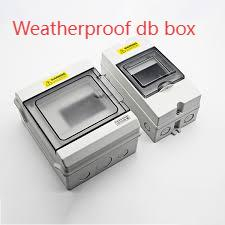
Specifying the right Weatherproof db box at the project outset avoids retrofit headaches, and choosing a tested Weatherproof db box helps protect circuits from moisture, dust, and mechanical stress while reducing long-term maintenance. Early alignment between design, electrical, and procurement teams ensures the enclosure matches real site exposures — not just a generic IP number on a datasheet.
Site profiling and exposure mapping
Begin by creating a clear exposure map for each mounting location. Record spray vectors, immersion risk, salt-laden atmospheres, frequent washdowns, and potential impact zones. Note cleaning chemicals and typical maintenance activities. This reality-based profile drives choices for material, gasket chemistry, fastener metallurgy, and cable-entry strategy — all of which are more important than a single ingress rating when the goal is predictable field performance.
Material selection and anti-corrosion strategy
Materials determine life expectancy. For coastal or chemical-exposed locations, specify higher-grade stainless steels or coated alloys and ensure fasteners use compatible metallurgy to avoid galvanic corrosion. Where weight and cost matter, UV-stable composites with reinforced ribs provide a good balance. Insist on surface prep and paint systems validated for the expected environment — primer and topcoat quality often outlive base metal choices when corrosion is the main threat.
Sealing systems and cable-entry design
A weatherproof enclosure is only as good as its cable entries. Choose gland plates that accept a range of cable diameters and allow strain relief; avoid field-cut entries that permanently compromise seals. Replaceable gasket channels and compression designs that tolerate periodic resealing simplify maintenance. For multi-cable entries, use partitioned plates to prevent seal pooling and to maintain uniform compression across the sealing face.
Thermal layout, surge protection, and electrical safety
Thermal performance is a common failure mode. Keep heat-generating devices separated from sensitive electronics and allow conductive mounting paths to shed heat to the chassis. Specify space for surge arrestors and fuse modules so protection is factory-fitted rather than retrofitted. Always request temperature-rise data for loaded assemblies and include thermal imaging in commissioning to catch hotspots early.
Mechanical mounting and impact resilience
Mounting details matter. Use mounting flanges sized for the substrate and avoid over-tightening that distorts seals. Reinforced lids, captive fasteners, and recessed fixings reduce vandalism and accidental knocks. For pole or pedestal mounts, ensure the box has reinforced boss points and consider anti-rotation features to maintain terminal integrity under vibration or mechanical stress.
Serviceability, spare parts, and lifecycle planning
Design with maintenance in mind: front-access terminals, removable gland plates, and modular inserts cut service time dramatically. Keep spare gasket kits, common gland sizes, and replacement rain covers available to minimize MTTR. Document torque values, gland sizes, and mounting orientation at handover so future servicing replicates the original installation conditions.
Monitoring readiness and smart integration
Reserve space for sensors (humidity, temperature, door-open) and power for remote status modules during initial specification. Built-in monitoring slots allow predictive maintenance without new penetrations that would jeopardize seals. Systems designed for monitoring simplify condition-based maintenance and reduce unplanned outages over the asset lifecycle.
Testing, procurement checks, and supplier transparency
Require suppliers to provide IP/IK test reports, material declarations, and witnessed assembly test certificates. Factory-applied seals and bench-validated assemblies reduce commissioning surprises. Ask for batch traceability and clear installation instructions — supplier transparency makes audits and warranty claims far easier.
Balancing cost against total ownership
Avoid choosing enclosures solely on purchase price. Factor in expected maintenance frequency, spare-parts logistics, warranty support, and probable failure modes in the target environment. Often a slightly higher initial spend for proven sealing systems and corrosion-resistant materials produces a lower total cost of ownership.
Choosing the right weatherproof enclosure family protects people and equipment while simplifying maintenance and upgrades. For product families, configurators, and technical datasheets, visit www.nante.com

 English
 Arabic
 French
 Spanish
 Portuguese
 Deutsch
 Turkish
 Dutch
Dutch
 Italiano
 Russian
 Romaian
 Portuguese (Brazil)