

Manufacturing Considerations For Economy Urine Bag Consistency
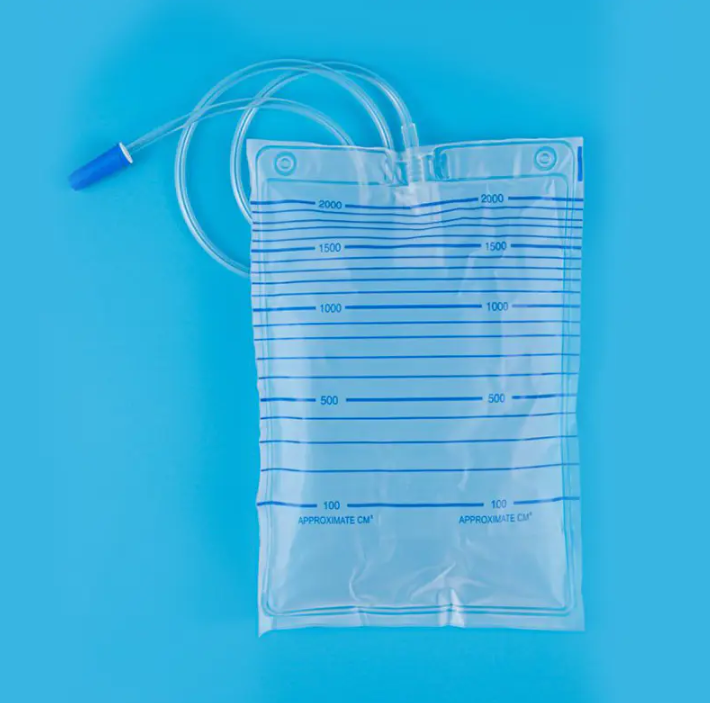
In clinical supply planning, understanding the functional differences between a Cross Valve Leg Bag and an Economy Urine Bag helps healthcare providers select appropriate options for specific care scenarios. These products serve overlapping purposes but are often differentiated by valve structure, usage duration, and patient mobility requirements.
The defining element of a cross valve leg bag is its internal valve mechanism, which is designed to manage fluid direction within the drainage system. This feature supports controlled flow by allowing urine to enter the bag while limiting reverse movement. Such a design is particularly relevant in situations where patients alternate between sitting, standing, and walking, as changes in body position can influence internal pressure within the tubing.
Standard economy urine bags typically employ a simpler inlet design that connects directly to catheter tubing without an internal anti-reflux valve. This structure supports straightforward manufacturing and ease of connection, making these bags suitable for bedside use or short-term collection where patient movement is limited. The reduced component count can also contribute to consistent production output across large quantities.
Manufacturing consistency is a key consideration for economy urine bags, as they are often supplied in high volumes to hospitals and care facilities. Uniform wall thickness, reliable sealing, and standardized connectors ensure compatibility with commonly used catheter systems. Quality control processes focus on leak prevention, outlet functionality, and material clarity rather than introducing additional structural features.
For cross valve leg bags, production involves closer monitoring of valve assembly and alignment. Valve performance depends on precise positioning and secure bonding to prevent unintended leakage or flow restriction. Manufacturers typically conduct functional testing to confirm that the valve responds predictably under simulated use conditions.
Patient mobility is a central factor influencing product selection. Leg bags are designed to be worn discreetly under clothing, supporting daily movement without interfering with routine activities. The shape and capacity of the bag are selected to balance sufficient urine volume with manageable weight during ambulation. Economy urine bags, with larger capacities, are more commonly used in stationary settings where frequent movement is not required.
Caregiver interaction with these products also differs. Leg bags require periodic monitoring to ensure straps remain secure and tubing is not kinked. Economy urine bags are often mounted on bed frames or stands, reducing the need for body attachment adjustments. Both designs aim to simplify routine care tasks while maintaining hygiene standards.
Storage and disposal practices are another practical consideration. Single-use economy urine bags are often disposed of according to facility protocols after designated use periods. Leg bags may be used over a defined timeframe depending on care guidance, with attention paid to maintaining cleanliness during use.
Selecting between these options involves evaluating patient condition, expected activity level, and care environment rather than assuming one design is universally suitable. By aligning product features with practical care needs, healthcare providers can support daily routines without introducing unnecessary complexity.
The continued use of both cross valve leg bags and economy urine bags reflects their respective roles within urinary management practices. Their designs remain grounded in functional requirements, emphasizing reliability and ease of handling within established care frameworks.

 English
 Arabic
 French
 Portuguese
 Deutsch
 Turkish
 Dutch
Dutch
 Italiano
 Russian
 Romaian
 Portuguese (Brazil)
 Greek
Greek