

Nante Industrial Plug Socket Connector For Heavy Duty Use
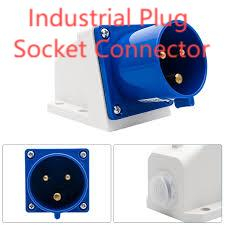
Modern industrial facilities rely on stable power delivery under constant vibration, dust exposure, and temperature variation, and an Industrial Plug Socket Connector placed correctly within a power network determines whether equipment runs safely or fails unexpectedly. In real-world operations, the Industrial Plug Socket Connector is not merely a point of connection but a safeguard that supports uptime, operator safety, and standardized energy distribution across complex industrial environments.
Understanding industrial power connection requirements
Industrial sites differ sharply from residential or commercial environments. Heavy machinery, mobile equipment, and temporary installations require connectors that can handle high current loads, repeated mating cycles, and mechanical stress. Voltage diversity, phase configurations, and grounding schemes vary by region and application, making standardized industrial connectors essential for compatibility and safety. Clear pin layouts and locking mechanisms reduce the risk of incorrect connections, which can otherwise lead to arc faults or equipment damage.
Mechanical durability and material engineering
Durability begins with materials. High-performance thermoplastics, reinforced polyamides, and corrosion-resistant metal components protect connectors from oil, chemicals, UV radiation, and mechanical impact. Impact resistance ratings and temperature tolerances should align with the operating environment, whether in steel plants, ports, or outdoor construction sites. Precision-molded housings and reinforced strain reliefs ensure that cables remain secure even under constant movement or vibration.
Electrical safety and compliance standards
International standards such as IEC and regional certifications guide current ratings, insulation performance, and ingress protection. Compliance ensures predictable behavior under load and during fault conditions. Features like shuttered contacts, pilot pins, and secure earthing paths help prevent accidental contact with live components. Engineers should always match connector ratings to the application’s duty cycle, avoiding underspecification that leads to overheating or premature wear.
Nante Industrial Connector Design Principles
This section focuses on the Nante industrial connector philosophy, emphasizing clarity, safety, and long service life without complicating installation. Ergonomic grips, color-coded voltage identification, and firm locking systems reduce human error on busy job sites. Modular design allows easy replacement of components while maintaining system integrity, helping maintenance teams minimize downtime during upgrades or repairs.
Installation best practices in industrial environments
Correct installation is as important as product quality. Cables should be selected for flexibility and abrasion resistance, with bending radii respected to avoid conductor fatigue. Mount connectors away from standing water, excessive heat sources, or sharp edges. Torque fasteners to specification and verify locking engagement before energizing circuits. Periodic inspection schedules help detect early signs of wear, contamination, or thermal stress.
Operational efficiency and workflow benefits
Standardized industrial connectors simplify logistics and operations. Equipment can be relocated, expanded, or serviced without rewiring entire systems. This flexibility supports lean manufacturing and temporary power deployment for events or construction phases. Clear visual identification of voltage and current ratings speeds setup while reducing training requirements for technicians and operators.
Lifecycle cost and sustainability considerations
While industrial-grade connectors may carry higher upfront costs, their extended service life and reduced failure rates often result in lower total ownership cost. Reusable designs and replaceable components support sustainability goals by minimizing waste. Long-term reliability also protects downstream equipment, preventing costly production interruptions.
Adapting to future industrial demands
As automation and electrification accelerate, connectors must accommodate higher power densities and smarter monitoring. Integration with energy management systems and compatibility with evolving standards ensure installations remain future-ready. Selecting adaptable connector systems today reduces the need for complete overhauls tomorrow.
In conclusion, industrial power distribution depends on thoughtful component selection, disciplined installation, and regular maintenance. When specified correctly, an industrial connector system supports safety, efficiency, and scalability across demanding applications. For deeper technical background and industry explanations related to industrial plugs and connectors, readers may refer to https://www.nante.com/news/industry-news/what-is-industrial-plug.html

 English
 Arabic
 French
 Spanish
 Portuguese
 Turkish
 Dutch
Dutch
 Italiano
 Russian
 Romaian
 Portuguese (Brazil)
 Greek
Greek