

Can valve choice reduce product waste?
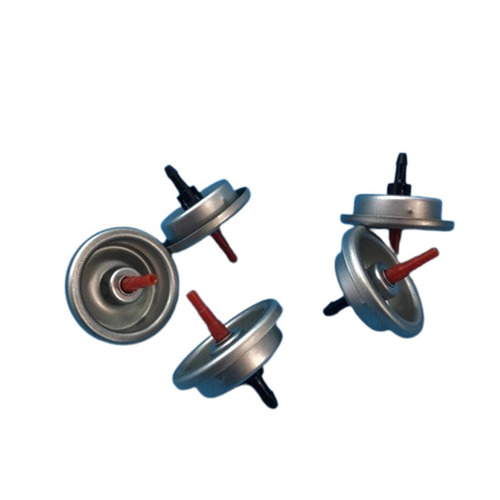
When people talk about why a spray feels right in the hand or lands where it should, product teams often point to Bluefire Aerosol Can Valve as a small but decisive element. It is the part that quietly determines whether a single press yields an even mist or a sputter that wastes product and tests patience. That difference matters when shoppers judge a brand by a first use and when formulators try to translate a lab texture into a reliable consumer experience.
Think of the trigger moment when a foam settles or a surface gets a thin, even coat. One type of actuator uses a built in swirl and internal passages to take a thicker mix and turn it into a gentle cloud. That action gives a steady feel to the spray and reduces the surprise of uneven bursts. By contrast, a simpler fitting depends more on a direct opening and the force of the propellant to fling fluid out. It can work perfectly for thin liquids but it can also stumble when a formula thickens or carries tiny particles.
Those differences show up in everyday settings. A haircare routine becomes less fussy when sprays land consistently and dry without streaks. A technician working in a tight workspace benefits from a valve that creates a predictable fan so there is less cleaning afterward. When your product needs repeated passes to reach the promised finish, customers notice. Subtle changes in the dispensing hardware can turn a hesitant trial into a confident repurchase.
There is also a quieter economic story. If a dispensing device reduces the number of pumps needed to cover a surface, that change affects how much active material a manufacturer must include in each unit. When supply chains tighten and sourcing becomes less predictable, small efficiencies add up. Packaging teams that test actuator options alongside formulation tweaks often find that modest adjustments to the spray mechanism deliver stable performance without altering the product recipe itself.
Environmental conversations have nudged these choices further into view. People are paying attention to how packaging behaves after use and whether a container can be handled responsibly. Choosing an actuator that minimizes waste in each application can be part of a wider approach to lower overall consumption. It is not a single solution to material challenges but it is one piece that can make refill concepts and longer use cycles more realistic.
From a practical launch perspective the decision is simple enough to test. Run side by side fills with real formulas and observe how spray pattern, droplet feel and clogging risk behave across temperature and handling conditions. Those hands on trials reveal whether an internal swirl or a basic orifice is better suited to the finished product. Teams who skip this step risk discovering the mismatch after packaging has gone to market.
User perception is a surprisingly strong driver. When an everyday action like treating a surface or applying a care product becomes smoother, people tell their friends. They also return fewer complaints. That feedback loop makes dispensing design a marketing lever as much as an engineering choice. Attention to how a spray lands, how much overspray floats in the air, and how easy it is to apply in small spaces adds up to a brand story that feels genuine to customers.
A final point for decision makers is supply resilience. Some actuator types are more complex to produce and may require careful sourcing. Others are simpler and can be assembled in higher volume without special steps. Balancing assembly realities with the user benefits of a refined spray often determines whether a change is worth pursuing for a given product line.
If your team is revisiting launch plans or rethinking an existing item, a short program of trials and honest user testing will show whether a refined actuator is an advantage or an unnecessary expense. Practical trials, not promises, reveal how well a design supports the user experience and the business case. For concrete product options and sample requests visit https://www.bluefirecans.com/ .

 English
 Arabic
 French
 Spanish
 Portuguese
 Deutsch
 Turkish
 Dutch
Dutch
 Russian
 Romaian
 Portuguese (Brazil)
 Greek
Greek